Archives

Prof. Junbo Zhao receives awards from the IEEE Power and Energy Society

Prof. Junbo Zhao recently joined the University of Connecticut’s ECE Department as an assistant professor and is serving as the grid modernization team lead at the Eversource Energy Center.
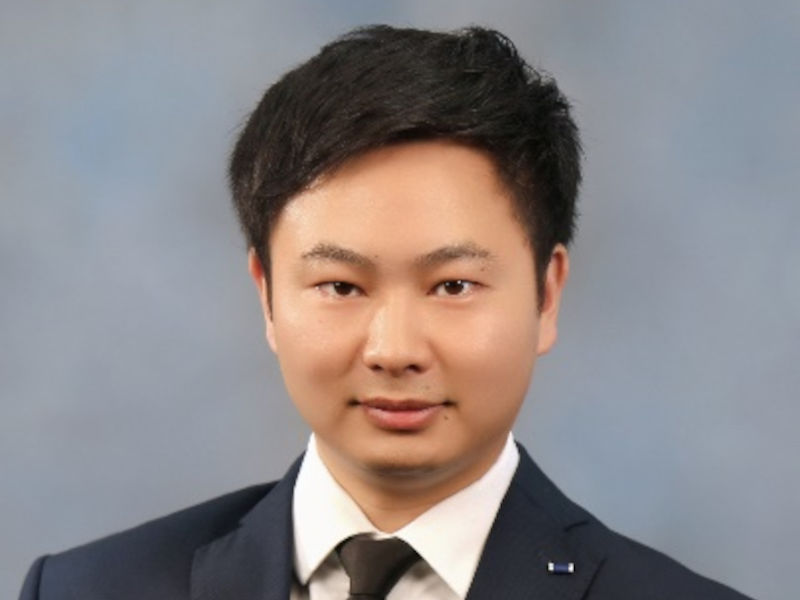
JUNBOZhao, serving as chair of the IEEE Task Force on Power System Dynamic State and Parameter Estimation, was recognized as part of the IEEE group that earned the IEEE Power and Energy Society’s Technical Committee Working Group Recognition Award for Outstanding Technical Report. The award is in recognition of outstanding performance in the development of a report that impacts the power and energy community. The committee’s report is titled “Power System Dynamic State and Parameter Estimation-Transition to Power Electronics-Dominated Clean Energy Systems.” This report aims to 1) clearly review its motivations and definitions, demonstrate its values for enhanced power system modeling, monitoring, operation, control, and protection as well as power engineering education; 2) provide recommendations to vendors, national labs, utilities, and ISOs on the use of dynamic state estimator for enhancement of the reliability, security, and resiliency of electric power systems. More information on the report and authors can be found here.

Prof. Zhao was also recently appointed as the Technical Committee Program Chair of the IEEE PES Renewable Systems Integration Coordinating Committee and has been nominated to serve as the next chair of the IEEE PES Connecticut Chapter.

Prof. Yang Cao Leads Research Project to Eradicate Use of Gas 25,200x More Harmful Than CO2

CREATOR: gd-jpeg v1.0 (using IJG JPEG v62), quality = 82

The gas sulfur hexafluoride (SF6) has been keeping our electrical grid safe from dangerous arcing and explosions since its introduction to the public in the 1930s. Developed in a General Electric lab, sulfur hexafluoride is one of the most widely used insulation gases by electrical utility companies because of its reliability and safety, but remains relatively unknown by the general public.

Starting in the 1960s, as greenhouse gases and their effect on the environment became more widely known, sulfur hexafluoride has been identified as one of the largest causes of global warming. While most educational and legislative efforts have been focused on CO2, or carbon dioxide, emissions as a big offender, sulfur hexafluoride has flown under the radar despite its staggering global warming potential: 25,200 times that of carbon dioxide.

Because of that, University of Connecticut Electrical and Computer Engineering Professor Yang Cao has been selected to receive $2.7 million in funding over three years from the U.S. Department of Energy’s Advanced Research Projects Agency-Energy (ARPA-E) to develop a lifecycle management framework, with innovations in physics based aging modeling, aging byproducts fixation, and a low-cost, high-fidelity multi-gas leak sensor with GE Research, to help utilities make a smooth transition to a new, SF6– free electrical grid.

Read More @ UConn Today

Prof. Liang Zhang Leads Team to Help Local Manufacturers Adopt Sustainable Practices

CREATOR: gd-jpeg v1.0 (using IJG JPEG v62), quality = 82

UConn is participating in a massive national research effort to help local manufacturers reduce their carbon footprint.

Associate professor in the School of Engineering, Liang Zhang, will lead the team, in collaboration with the University of New Haven. This work is funded by the U.S. Department of Energy (DOE).

“We are excited to bring a DOE IAC to Connecticut for the first time in the history of the IAC program,” Zhang says. “This is long overdue for Connecticut, and we believe that it will bring significant benefits to the state’s environment and economic development efforts through its service to the large number of small and medium manufacturers in the area.”

The project’s $3.4 million budget is part of the $60 million effort dispersed across 32 universities in 28 states. This is the largest-ever cohort of university-based Industrial Assessment Centers (IACs). These centers are tasked with helping small and medium-sized manufacturers reduce their carbon emissions, lower energy costs, and train the next generation of energy-efficient workers.

Read More @ UConn Today

Bahram Javidi Named Finalist for Berthold Leibinger Innovation Award for COVID-19 Detection Device

bahram javidi

UConn Board of Trustees Distinguished Professor of engineering Bahram Javidi has been named a finalist for the Berthold Leibinger Innovation Award for his rapid disease identification technology using compact, low-cost optical holographic instruments, including COVID-19 detection.

The Berthold Leibinger Innovationspreis honors scientists and developers making advancements in the field of laser technology. Javidi is being recognized for applying knowledge of optics and digital holography, and pattern recognition to biomedical issues with real-life applications for under-resourced healthcare systems.

“It’s always an honor to see that your peers value your work and value your contributions,” Javidi says.

Javidi’s technology is a portable, low-cost COVID-19 testing instrument that uses a pinprick’s worth of blood to detect the virus within minutes.

Javidi developed similar testing devices for malaria and sickle cell disease, which are common in under-resourced tropical and subtropical areas. The device picks up on abnormalities in the blood caused by infection.

Read More @ UConn Today

ECE Senior Design 2021

Hacker using laptop. Lots of digits on the computer screen.

Congratulations to our 2021 ECE Senior Design teams.  

Prof. Liang Zhang, ECE Department Director of Undergraduate Studies and Senior Design Coordinator, announced the top 3 winners of the senior design competition for 2021.

Many thanks to the judges Profs. Helena Silva, Ali Gokirmak, Peter Willet, and Faquir Jain.

It is really a pity that the students didn’t get to present their projects in live action. If you are interested in knowing more about our senior design projects this year, please visit: 

2021 Electrical and Computer Engineering Projects

ECE Researchers Develop Cheap, Accurate Device to Diagnose COVID-19

figure 1
binary comment

Lab tests for COVID-19 require pricey equipment, and field tests aren’t globally available nor work in real-time, making it hard for health care workers in remote areas of the globe to diagnose the disease. To help, UConn researchers have invented a portable, inexpensive device that has the potential to diagnose COVID anywhere.

Getting tested for COVID-19 is easy in Connecticut, where clinics, hospitals, and pharmacies have free testing stations, and even at the height of the pandemic most people could get tested fairly quickly. But in many other parts of the world, it’s not so easy. There aren’t always labs with the right equipment nearby, and field portable tests’ results aren’t available immediately.

UConn engineering professor Bahram Javidi and biomedical engineering graduate student Timothy O’Connor had an idea for a better, easier way to test for COVID. They knew red blood cells are affected during a bout of COVID-19. Red blood cells carry oxygen from your lungs through your bloodstream to all parts of your body, and many of the symptoms of COVID-19, including low oxygen levels and blood clots, involve red blood cells.

Read More @ UConn Today

ECE faculty ranked in top 2% of engineering scholars

A ranking of the top 2 percent of scientists in the world in a study published in PLOS Biology Journal included ten professors and emeriti from the UConn ECE Department. The study identifies the top scholars in their fields by considering their career long citation impact through 2019..

Below are the ECE faculty who are listed among the top 2 percent most-cited throughout the entirety of their career:

  • Yaakov Bar-Shalom, Board of Trustees Distinguished Professor & Marianne E. Klewin Endowed Professor in Engineering
  • Ali Bazzi, UTC Associate Professor of Engineering Innovation
  • Bahram Javidi, Board of Trustees Distinguished Professor
  • David Kleinman, Professor Emeritus
  • Peter Luh, Professor Emeritus
  • Krishna Pattipati, Board of Trustees Distinguished Professor & UTC Professor of Systems Engineering
  • Geoff Taylor, Professor Emeritus
  • Marten van Dijk, Research Professor
  • Peter Willett, Professor
  • Shengli Zhou, Professor

Brandon D’Agostino ’20 (CompE/EE) awarded NSF Graduate Research Fellowship

Brandon D’Agostino ’20 (CompE/EE) has been awarded the National Science Foundation (NSF) Graduate Research Fellowship for 2021. This fellowship provides three years of financial support for graduate study leading to research-based graduate degrees in STEM.


Brandon’s foray into academic research began in summer 2019 via an NSF Research Experiences for Undergraduates (REU) fellowship in Professor Omer Khan’s Computer Architecture Group. Since his initial stint that summer, Brandon has remained engaged in research with Professor Khan as a research assistant. Brandon contributed to IRONHIDE, a secure multicore architecture that efficiently mitigates microarchitecture state based side-channel attacks in microprocessors, that was presented at the 2020 IEEE International Symposium on High-Performance Computer Architecture, and co-authored OPTIMUS, a security-centric dynamic hardware partitioning scheduler for secure processors, that was published in 2020 at the IEEE Transactions on Computers. Brandon is also a tutor in UConn’s chapter of IEEE Eta Kappa Nu (IEEE-HKN), the electrical engineering honor society.


Outside of academia, Brandon has held two summer co-ops in Moog, Inc., an international designer, manufacturer, and integrator of precision control components and systems for aerospace, defense, industrial, and medical applications. Notably, Brandon collaborated in Moog’s preeminent Technology and Advanced Pursuits (TAP) group on the development of safety-critical sensor systems for Moog’s prototype autonomous vehicle platform. In addition to this, Brandon has developed several embedded control systems for high-end audio electronics manufacturers in North America and Europe.


Brandon is looking forward to embarking upon his proposed NSF research project, WARDEN, that aims to develop programmable hardware security capabilities for domain-specific computer architectures (DSAs).