
Archives

ECE Seminar Series: Seeing invisible biological cells – New horizons in cancer diagnosis and IVF

ECE title

ECE Seminar Series Fall 2016

Friday October 21st 1:30-2:30 PM, ITEB 125

Seeing invisible biological cells – New horizons in cancer diagnosis and IVF

Prof. Natan T. Shaked

Tel Aviv University, Israel

Abstract: One of the major challenges in the field of optical imaging of live cells is to achieve label-free but still fully quantitative measurements, which afford high-resolution morphological mapping at the single cell level. In particular, developing efficient, non-subjective, quantitative optical imaging technologies for single-cell imaging with clinical value is a challenging task. Live biological cells are three-dimensional (3D) dynamic microscopic objects that constantly adjust their sizes, shapes and other biophysical features. Visualizing cellular phenomena requires microscopic techniques that can achieve high data acquisition rates, while retaining both resolution and contrast to observe fine cellular features. However, cells in vitro are mostly-transparent 3D objects with absorbance and reflection characteristics that are very similar to their surroundings, and thus conventional intensity-based light microscopy approaches lack the required sensitivity. Exogenous labelling agents such as fluorescent dyes can be used to improve contrast. However, fluorescent agents tend to photo-bleach, reducing the available imaging time. Other concerns include cytotoxicity and the possibility that the exogenous agents will influence cellular behavior. Still, the widely used methods for detection and diagnosis of medical conditions in the cellular level cancer are based on indirect and subjective histological and cytological examination of tissues or samples from bodily fluids. Alternatively, if the sample has to stay alive, such as in sperm selection for in-vitro fertilization, the cells cannot be well visualized. In this lecture, I will review our latest advances in developing new imaging modalities to achieve affordable label-free but still fully quantitative measurements, which offer high-resolution 3D morphological and mechanical mapping of dynamic cells. These approaches are expected to pave the way to new clinical diagnosis and monitoring tools in the single-cell level. I will review two specific applications with a great clinical value: cancer monitoring and sperm selection in in vitro fertilization (IVF).


Short Bio
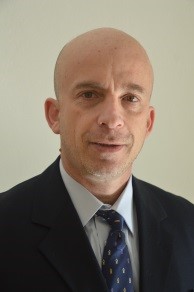
: Prof. Natan T. Shaked is an Associate Professor in the Department of Biomedical Engineering at Tel Aviv University, Israel. Till April 2011, Prof. Shaked was a Visiting Assistant Professor in the Department of Biomedical Engineering at Duke University, Durham, North Carolina, USA. In the last 4 year, Prof. Shaked raised more 4 million dollar for research. Prof. Shaked is the coauthor of more than 50 refereed journal papers and 80 conference papers, and several book chapters, patents, and an edited book.
ECE Seminar Series: Maximizing Efficiency for Simulation-based or Sample-based Optimization

ECE title

ECE Seminar Series Fall 2016

Friday November 11th 3-4 PM, ITEB 336

Maximizing Efficiency for Simulation-based or Sample-based Optimization

Chun-Hung Chen

George Mason University

Abstract: Simulation and optimization are two popular engineering design tools. Optimization intends to choose the best element from some set of available alternatives. Stochastic simulation is a powerful modeling and software tool for analyzing modern complex systems that arise in manufacturing, power grids, transportation, healthcare, finance, defense, and many other fields. Detailed dynamics of complex, stochastic systems can be modeled in simulation. This capability complements the inherent limitation of traditional optimization, so the combining use of simulation and optimization is growing in popularity. This seminar discusses how we can integrate these two popular tools together and what computational issues we have to face in this integration. We will give an overview of some existing approaches, including gradient-based and model-based approaches. We will also present our developments based on a new technique called Optimal Computing Budget Allocation, initially developed by the speaker. Our goal is to maximize the efficiency of finding a good decision via optimal control of simulation replications and optimal sampling in design space.


Short Bio
: Chun-Hung Chen received his Ph.D. degree from Harvard University in 1994. He is currently a Professor at George Mason University. Dr. Chen was an Assistant Professor at the University of Pennsylvania before joining GMU. He was also affiliated with National Taiwan University (Electrical Eng. and Industrial Eng.) from 2008-14. Sponsored by NSF, NIH, DOE, NASA, FAA, Missile Defense Agency, and Air Force in US, he has worked on the development of very efficient methodology for simulation-based decision making and its applications. Dr. Chen received several awards such as “National Thousand Talents Award” from China and Eliahu I. Jury Award from Harvard University. He has served as a Department Editor for IIE Transactions, Department Editor for Asia-Pacific Journal of Operational Research, Associate Editor for IEEE Transactions on Automation Science and Engineering, Associate Editor for IEEE Transactions on Automatic Control, Area Editor for Journal of Simulation Modeling Practice and Theory, Advisory Editor for International Journal of Simulation and Process Modeling, and Advisory Editor for Journal of Traffic and Transportation Engineering. Dr. Chen is the author of two books, including a best seller: “Stochastic Simulation Optimization: An Optimal Computing Budget Allocation”. He is an IEEE Fellow.

ECE Seminar Series: A Decade of Compressive Sensing-application in optical sensing and imaging, achievements and challenges

ECE title

ECE Seminar Series Fall 2016

Wednesday October 19th 3-4 PM, ITEB 336

A Decade of Compressive Sensing-application in optical sensing and imaging, achievements and challenges

Adrian Stern

Ben Gurion University of Negev, Israel

Abstract: The theory of compressive sensing (CS) has attracted great attention since it was published a decade ago. CS has found natural applications in imaging and optical sensing sciences, yielding a great number of publications. From a decade perspective, I will present an overview of the main achievements in optical CS engineering and discuss remaining challenges. I will survey the main applications and present representative examples form our and other’s group results. I will highlight the benefits gained from the CS application in optics, present the main implementation challenges of the mathematical CS theory in optical engineering. Finally, future directions will be discussed.


adrian-sternShort Bio: Adrian Stern received his B.Sc., M. Sc. (cum laude) and PhD degrees from Ben-Gurion University of the Negev, Israel, in 1988, 1997 and 2003 respectively, all in Electrical and Computer Engineering. Currently he is an Associate Professor at Electro-Optical Engineering department at Ben-Gurion University in Israel where he serves as department head. During the years 2002-2004 he was a postdoctoral fellow at University of Connecticut. During 2007-2008 he served as senior research and algorithm specialist for GE Molecular Imaging, Israel. In 2014-2015, during his sabbatical leave, he was a visitor scholar and professor at Massachusetts Institute of Technology (MIT). His current research interests include computational imaging and sensing, 3D imaging, compressed imaging, phase-space optics, bio-medical imaging. Dr. Stern has published over 150 technical articles in leading peer reviewed journals and conference proceeding, more than quarter of them being invited papers. Dr. Stern is a Fellow of SPIE, member of IEEE, OSA. He served as editor for Optics Express journal. He is the editor of the first book to be published on optical compressive sensing.