
Miscellaneous

ECE Seminar Series: Seeing invisible biological cells – New horizons in cancer diagnosis and IVF

ECE title

ECE Seminar Series Fall 2016

Friday October 21st 1:30-2:30 PM, ITEB 125

Seeing invisible biological cells – New horizons in cancer diagnosis and IVF

Prof. Natan T. Shaked

Tel Aviv University, Israel

Abstract: One of the major challenges in the field of optical imaging of live cells is to achieve label-free but still fully quantitative measurements, which afford high-resolution morphological mapping at the single cell level. In particular, developing efficient, non-subjective, quantitative optical imaging technologies for single-cell imaging with clinical value is a challenging task. Live biological cells are three-dimensional (3D) dynamic microscopic objects that constantly adjust their sizes, shapes and other biophysical features. Visualizing cellular phenomena requires microscopic techniques that can achieve high data acquisition rates, while retaining both resolution and contrast to observe fine cellular features. However, cells in vitro are mostly-transparent 3D objects with absorbance and reflection characteristics that are very similar to their surroundings, and thus conventional intensity-based light microscopy approaches lack the required sensitivity. Exogenous labelling agents such as fluorescent dyes can be used to improve contrast. However, fluorescent agents tend to photo-bleach, reducing the available imaging time. Other concerns include cytotoxicity and the possibility that the exogenous agents will influence cellular behavior. Still, the widely used methods for detection and diagnosis of medical conditions in the cellular level cancer are based on indirect and subjective histological and cytological examination of tissues or samples from bodily fluids. Alternatively, if the sample has to stay alive, such as in sperm selection for in-vitro fertilization, the cells cannot be well visualized. In this lecture, I will review our latest advances in developing new imaging modalities to achieve affordable label-free but still fully quantitative measurements, which offer high-resolution 3D morphological and mechanical mapping of dynamic cells. These approaches are expected to pave the way to new clinical diagnosis and monitoring tools in the single-cell level. I will review two specific applications with a great clinical value: cancer monitoring and sperm selection in in vitro fertilization (IVF).


Short Bio
: Prof. Natan T. Shaked is an Associate Professor in the Department of Biomedical Engineering at Tel Aviv University, Israel. Till April 2011, Prof. Shaked was a Visiting Assistant Professor in the Department of Biomedical Engineering at Duke University, Durham, North Carolina, USA. In the last 4 year, Prof. Shaked raised more 4 million dollar for research. Prof. Shaked is the coauthor of more than 50 refereed journal papers and 80 conference papers, and several book chapters, patents, and an edited book.
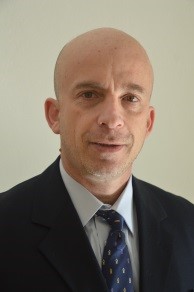
ECE Seminar Series: Maximizing Efficiency for Simulation-based or Sample-based Optimization

ECE title

ECE Seminar Series Fall 2016

Friday November 11th 3-4 PM, ITEB 336

Maximizing Efficiency for Simulation-based or Sample-based Optimization

Chun-Hung Chen

George Mason University

Abstract: Simulation and optimization are two popular engineering design tools. Optimization intends to choose the best element from some set of available alternatives. Stochastic simulation is a powerful modeling and software tool for analyzing modern complex systems that arise in manufacturing, power grids, transportation, healthcare, finance, defense, and many other fields. Detailed dynamics of complex, stochastic systems can be modeled in simulation. This capability complements the inherent limitation of traditional optimization, so the combining use of simulation and optimization is growing in popularity. This seminar discusses how we can integrate these two popular tools together and what computational issues we have to face in this integration. We will give an overview of some existing approaches, including gradient-based and model-based approaches. We will also present our developments based on a new technique called Optimal Computing Budget Allocation, initially developed by the speaker. Our goal is to maximize the efficiency of finding a good decision via optimal control of simulation replications and optimal sampling in design space.


Short Bio
: Chun-Hung Chen received his Ph.D. degree from Harvard University in 1994. He is currently a Professor at George Mason University. Dr. Chen was an Assistant Professor at the University of Pennsylvania before joining GMU. He was also affiliated with National Taiwan University (Electrical Eng. and Industrial Eng.) from 2008-14. Sponsored by NSF, NIH, DOE, NASA, FAA, Missile Defense Agency, and Air Force in US, he has worked on the development of very efficient methodology for simulation-based decision making and its applications. Dr. Chen received several awards such as “National Thousand Talents Award” from China and Eliahu I. Jury Award from Harvard University. He has served as a Department Editor for IIE Transactions, Department Editor for Asia-Pacific Journal of Operational Research, Associate Editor for IEEE Transactions on Automation Science and Engineering, Associate Editor for IEEE Transactions on Automatic Control, Area Editor for Journal of Simulation Modeling Practice and Theory, Advisory Editor for International Journal of Simulation and Process Modeling, and Advisory Editor for Journal of Traffic and Transportation Engineering. Dr. Chen is the author of two books, including a best seller: “Stochastic Simulation Optimization: An Optimal Computing Budget Allocation”. He is an IEEE Fellow.

ECE Seminar Series: A Decade of Compressive Sensing-application in optical sensing and imaging, achievements and challenges

ECE title

ECE Seminar Series Fall 2016

Wednesday October 19th 3-4 PM, ITEB 336

A Decade of Compressive Sensing-application in optical sensing and imaging, achievements and challenges

Adrian Stern

Ben Gurion University of Negev, Israel

Abstract: The theory of compressive sensing (CS) has attracted great attention since it was published a decade ago. CS has found natural applications in imaging and optical sensing sciences, yielding a great number of publications. From a decade perspective, I will present an overview of the main achievements in optical CS engineering and discuss remaining challenges. I will survey the main applications and present representative examples form our and other’s group results. I will highlight the benefits gained from the CS application in optics, present the main implementation challenges of the mathematical CS theory in optical engineering. Finally, future directions will be discussed.


adrian-sternShort Bio: Adrian Stern received his B.Sc., M. Sc. (cum laude) and PhD degrees from Ben-Gurion University of the Negev, Israel, in 1988, 1997 and 2003 respectively, all in Electrical and Computer Engineering. Currently he is an Associate Professor at Electro-Optical Engineering department at Ben-Gurion University in Israel where he serves as department head. During the years 2002-2004 he was a postdoctoral fellow at University of Connecticut. During 2007-2008 he served as senior research and algorithm specialist for GE Molecular Imaging, Israel. In 2014-2015, during his sabbatical leave, he was a visitor scholar and professor at Massachusetts Institute of Technology (MIT). His current research interests include computational imaging and sensing, 3D imaging, compressed imaging, phase-space optics, bio-medical imaging. Dr. Stern has published over 150 technical articles in leading peer reviewed journals and conference proceeding, more than quarter of them being invited papers. Dr. Stern is a Fellow of SPIE, member of IEEE, OSA. He served as editor for Optics Express journal. He is the editor of the first book to be published on optical compressive sensing.

ECE Seminar Series: Large-Area High-Efficiency Solid-State Thermal Neutron Detector

ECE title

ECE Seminar Series Spring 2016

Thursday May 5th 1-2 PM, ITEB 336

Large-Area High-Efficiency Solid-State Thermal Neutron Detector

Rajendra Dahal

Electrical, Computer, and Systems Engineering

Rensselaer Polytechnic Institute, Troy, New York

Abstract: The development of high-efficiency large-area solid-state neutron detectors is urgent for a wide range of civilian and defense applications; such as monitoring of “dirty bombs”, border patrol, medical and industrial imaging. The applications of present neutron detector systems are limited by cost, size, weight, and power requirements. An efficient self-powered, or low-power, solid-state neutron detector using mature silicon technology would provide significant benefits in terms of cost and volume. Also, it would allow wafer-level integration with readout electronics. This talk presents current research advances on fabrication and characterization of a large area solid-state thermal-neutron detector module with detection efficiency exceeding 30%. The detector utilizes three-dimensional honeycomb silicon microstructures, and a continuous p+-n junction diode filled with enriched boron (99% of 10B) as a converter material for thermal-neutron detection. The low leakage current density of the fabricated device helps to increase the detector surface area to greater than 16cm2. These results show promise in using such highly efficient large-area solid-state neutron detectors in home land security applications.


Short Bio: Dr. Rajendra Dahal is a Research Assistant Professor in the Electrical, Computer, and Systems Engineering Department here at Rensselaer. His current research interests include epitaxial growth of wide band-gap semiconductor thin films, such as 2D layered materials and nanostructures; fabrication of micro/nanostructures for efficient radiation detectors; and optoelectronic devices.


ECE Seminar Series: Industrial Strength Real World Multi-Sensor Data Fusion

ECE title

ECE Seminar Series Spring 2016

Monday May 2rd 1-2 PM, ITEB 336

Industrial Strength Real World Multi-Sensor Data Fusion

Frederick E. Daum

Raytheon

Abstract: We explain why multi-sensor data fusion is a difficult problem in the real world. We also describe several new algorithms that are designed to solve such problems, considering real world effects. The major real world issues for data fusion include: (1) unresolved sensor data; (2) residual sensor bias errors; (3) closely spaced multiple targets; (4) unresolved sensor data; (5) non-unity probability of detection and non-zero probability of false alarms from noise & clutter; (6) inconsistent covariance matrices; and (7) unresolved sensor data. Such problems often result in putting the wrong data into your favorite estimation algorithm (extended Kalman filter, particle filter, unscented Kalman filter, etc.). The best way to ruin the performance of a good filter is to put the wrong data into it. One of the best algorithms to mitigate such problems is called GNPL (global nearest pattern Levedahl), invented at Raytheon. This algorithm jointly estimates the residual relative sensor biases and the association of data or tracks between sensors. The key word is “jointly”. We show comparisons of GNPL vs. simpler algorithms that decouple the bias estimation and data association problems. For difficult scenarios, GNPL is superior to simpler decoupled algorithms. We also describe more advanced algorithms that promise better performance at the cost of higher real time computational complexity. Such algorithms actually model the correct relevant physics, and they also exploit recent advances in particle filters and GPUs and the theory of random sets. This talk is for normal engineers who do not have nonlinear filters for breakfast.


Short Bio: Fred Daum is an IEEE Fellow, a principal Fellow at Raytheon, a Distinguished Lecturer for the IEEE and a graduate of Harvard University. Fred was awarded the Tom Phillips prize for technical excellence, in recognition of his ability to make complex radar systems work in the real World. He developed, analyzed and tested the real time algorithms for essentially all the large long range phased array radars built by the USA in the last four decades, including: Cobra Dane, PAVE PAWS, Cobra Judy, BMEWS, THAAD, ROTHR, UEWR, and SBX, as well as many other systems (SPY-3 proposal, JLENS proposal, SPACE FENCE proposal, LRDR proposal, JADGE, Project Hercules, ADI concept A, C-RAM, C-MAR, AN/TPN-19, ASDE-X, DERD-MC, NATO Sea Sparrow, DLGN-38, GPS OCX and several sonar systems). These real time algorithms include: extended Kalman filters, radar waveform scheduling, Bayesian discrimination, data association, discrimination of satellites from missiles, calibration of tropospheric and ionospheric refraction, and target object mapping. Fred’s exact fixed finite dimensional nonlinear filter theory generalizes the Kalman and Beneš filters. Fred’s particle flow nonlinear filter is many orders of magnitude faster than standard particle filters for the same accuracy. He has published nearly one hundred technical papers, and he has given invited lectures at MIT, Harvard, Yale, Caltech, the Technion, Ecole Normale Superieure de Paris, Brown, Georgia Tech., Duke, Univ. of Connecticut, Univ. of Minnesota, Melbourne Univ., Univ. of Toulouse, Univ. of New South Wales, Univ. of Canterbury, Liverpool Univ., Xidian Univ., Univ. of Illinois at Chicago, Washington Univ. at St Louis, McMaster Univ., Boston Univ., Northeastern University, Huntsville, Colorado and Rutgers.


ECE Seminar Series: Enabling resilient control of power systems with distributed energy storage

ECE title

ECE Seminar Series Fall 2015

Monday November 16th 2-3 PM, ITEB 336

Enabling resilient control of power systems with distributed energy storage

Mads R. Almassalkhi

University of Vermont

Abstract: In 2003, the National Academy of Engineering named the electric grid the Greatest Engineering Achievement of the 20th century, however, just a few months later, US and Canada experienced their largest ever black-out. Year-to-year increases in the number of large blackouts suggest that power systems today are operated closer and closer to their limits. To aid human control-room operators overcome this challenge, increased sensing and actuation is becoming available in the control room, including PMUs, FACTS devices, and fast-acting demand and energy storage. However, this added system complexity makes it more difficult for human operators to determine an appropriate response to unanticipated events. At a minimum, decision-support tools are needed to guide human decision-making. In fact, closed-loop feedback processes will become indispensable. As such, we present resilient model predictive control (MPC) schemes that mitigate the effects of overloads in transmission and distribution systems. Resilient control is achieved through a receding-horizon model predictive control (MPC) strategy which alleviates temperature-based overloads on transmission lines and distribution-level transformers and, therefore, prevents large outages. Both centralized and distributed optimization-based schemes will be presented with numerical case studies.


Short Bio: Mads R. Almassalkhi is an Assistant Professor at School of Engineering at the University of Vermont. His research interests lie at the intersection of power systems, optimization, and controls and focus on developing novel feedback and optimization algorithms that improve responsiveness and resilience of power systems, which is increasingly more important as power systems are operating closer and closer to their limits. His past work includes model predictive control of bulk power systems, distributed control of multi-agent systems, applications of optimization and systems theory to electric and multi-energy power systems. Prior to joining the University of Vermont, he was lead systems engineer at Root3 Technologies. He received his MS and PhD from the University of Michigan in Electrical Engineering: Systems and a dual-degrees in Electrical Engineering and Applied Mathematics from the University of Cincinnati, Ohio.


ECE Seminar Series: The Emergence of Topological Insulators as Candidates for Optoelectronics and Spin-Based Applications

ECE title

ECE Seminar Series Fall 2015

Thursday November 13th 1-2 PM, ITEB 336

The Emergence of Topological Insulators as Candidates for Optoelectronics and Spin-Based Applications

Parijat Sengupta

Boston University

Abstract: The advent of topological ideas in condensed matter is a new paradigm where the traditional notions of Fermi-liquid theory and order parameter do not explain experimentally observed phenomena, for instance, the integer and fractional quantum Hall effect and the more recently discovered topological insulators (TI). In this presentation, I will focus on topological insulators and go over some of the key facts that typically characterize these materials. I will begin by presenting  analytic results on band structure of topological insulators derived using a simple Dirac Hamiltonian and connect them to more elaborate semi-empirical tight binding and continuum k.p calculations. An important aspect of TI band structure is the helical dispersion where the spin is locked perpendicularly to momentum giving rise to 1) spin-polarized photocurrents when the surface is illuminated with circularly-polarized light and 2) spin-dependent optical transition from valence to conduction surface bands. Using the phenomenon of circular dichroism (preferential absorption of right- or left-circularly polarized light), I will emphasize on light absorption on the surface of 3D TIs such as Bi2Se3 with a single Dirac cone and  contrast them with the C2v group symmetric (at X symmetry point) triple Dirac-coned topological Kondo insulator (TKI) samarium hexaboride (SmB6). I will explicitly show how the helical band structure of SmB6 at the X symmetry point of the surface Brillouin zone with Rashba- and Dresselhaus-like terms give rise to a dual-valued circular dichroism. Further, using the Berry curvature I will try to draw a parallel between the emerging field of valleytronics in transition metal dichalcogenides such as MoS2 and TIs that conform to the C2v symmetry. I will seek to emphasize that the strong polarization-dependent light absorbance on account of the Dirac fermions on surface of a TI and an easily tunable surface band gap can lead to design of optoelectronic devices with greater efficiency. Since spin and its myriad manifestations in solid state is crucial to topological insulators, I will present results on the frequency-dependent spin susceptibility in the TKI SmB6 which may prove useful to probe spin density currents that serve as the foundational block of spin-based applications. In the last part of the talk I will draw attention to the fact that while most topological insulators are strongly spin-orbit coupled driven, the multi-layered Dirac semi-metal black phosphorus which is a 2D material undergoes a giant Stark effect induced topological phase transition when doped with potassium. The topological features of BP with Dirac fermions and a linear band structure can lead to graphene-like transport properties for improved device performance. I will map the dynamic optical conductivity and spin current density changes to the transitions of BP from a trivial insulator with finite band gap to a zero gap material and then to a topological insulator with increasing dopant (K) density.


Short Bio: Parijat Sengupta received his PhD in electrical engineering from Purdue University, West Lafayette in December 2013 where he primarily worked on the electronic structure of materials and focused on topological insulators for his dissertation. Following his PhD, he joined the computational materials group at the University of Wisconsin-Madison, Madison in January 2014 as a postdoctoral research associate and was involved in modeling of defects in nuclear materials using ab-initio principles and molecular dynamics. He moved to the Photonics Center at Boston University in March of 2015 as a postdoctoral research associate and is currently working on light-matter interaction and spin transport in topological insulators and electron transport in colloidal quantum dots. Prior to joining Purdue university, he was employed with Nvidia Corp., Santa Clara as a product engineer.


ECE Seminar Series: Materials Under Extreme Electric Fields

ECE title

ECE Seminar Series Fall 2014

Thursday December 4th 1-2 PM, ITEB 336

Materials Under Extreme Electric Fields

Yang Cao

Electrical and Computer Engineering, University of Connecticut

Abstract: The rising demands for electrical power and miniaturization of electronic devices have at least one requirement in common, the ever thinner dielectrics operating under extreme electric fields. Despite the long history of engineering and fascinating failure patterns, the dielectric breakdown process and mechanism are actually poorly understood “to the extent that predictions of the breakdown strength of solids cannot be made solely on a molecular basis…. A theory for high-field conduction in solid insulation systems is at the root of such understanding, and no such theory exists at present[1]”. Combinatorial computational and experimental tools are under development for the fundamental understanding of critical prebreakdown processes such as charge injection, transport, trapping and defects creation that lead to instability under extreme electric fields. Recent progress in high field characterizations made in Rational Design of Advanced Polymeric Capacitor Films MURI Project and Polymeric HVDC Cabling project will be reported out to showcase the initial steps towards the predictive design and development of power components with game changing characteristics for power conversion and renewable integration.


Short Bio: Yang Cao is an associate professor at Electrical and Computer Engineering Department and the director of the Electrical Insulation Research Center (EIRC) of the University of Connecticut. After graduating from the University of Connecticut in 2002, he worked at GE Global Research Center as an electrical engineer for 11 years in the fields of high voltage engineering for electrical power and medical diagnosis imaging. At EIRC, he is currently conducting research projects funded by DOE, DOD, industrial corporations such as GE, Exxon-Mobile, Schlumberger, to develop enabling technologies for high renewable penetration.

当前显示image002.jpg当前显示image003.jpg


[1] DOE Basic Energy Sciences Workshop Report: Research Needs for Materials under Extreme Environments

ECE Seminar Series: Application-Specific HPC from an Operational Standpoint

ECE title

ECE Seminar Series Fall 2014

Thursday November 13st 1-2 PM, ITEB 336

Application-Specific HPC from an Operational Standpoint

Chris J. Michael

Naval Research Laboratory

Abstract: There are numerous situations, especially within the Department of Defense (DoD), where smaller HPC systems are specified and deployed to handle a moderately predictable workload containing less than a dozen or so special-purpose applications. Typically, these systems are designed in a naive way using rough high-level benchmarking and intuition. In most cases, this results in a system that runs the workload inefficiently, consuming precious resources and dramatically increasing the operational cost of the system.

Application-specific HPC involves designing heterogeneous systems with respect to the application workload. This is accomplished through profiling of the applications against the potential hardware candidates. Resulting systems can dramatically increase the workload efficiency when considering execution time, cost of operation, power, size, and weight. In this presentation, the basics of application-specific HPC from an operational DoD standpoint are covered. Additionally, case studies that exemplify this methodology are presented, the most thorough of which deals with all-pairs shortest paths processing for sparse graphs.


Short Bio: Dr. Chris J. Michael is a computer engineer with the Naval Research Laboratory located in Stennis Space Center, Mississippi. His research interests include heterogeneous computing, special-purpose computer architecture, large-volume streaming data processing, and high-performance image processing. Chris is currently working with Department of Defense sponsors to find rapidly transition able solutions to computationally heavy problems. Examples of involved computation of interest include graph processing such as centrality as well as image processing involving sparse representation theory. He received his doctorate in electrical engineering from Louisiana State University in 2010.


Host: Omer Khan, omer.khan@engr.uconn.edu

ECE Seminar Series: Passivity-Based Control and Estimation in Networked Robotics and Vision

ECE title

ECE Seminar Series Fall 2014

Thursday October 30st 1-2 PM, ITEB 336

Passivity-Based Control and Estimation in Networked Robotics and Vision

Takeshi Hatanaka

Assistant Professor, Department of Mechanical and Control Engineering, Tokyo Institute of Technology


Abstract: This talk introduces a series of our research outcomes on passivity-based
estimation and control in networked robotics and vision. The former part discusses how passivity is utilized for visual feedback motion estimation and control. After pointing out inherent passivity in 3-D rigid-body motion, we present a passivity-based 3-D motion estimation mechanism, termed visual motion observer, and the observer-based camera control scheme. It is also shown that the presented framework can successfully incorporate other passive components like an object motion model and a manipulator dynamics while ensuring stability of the total system, owing to passivity preservation property w.r.t. feedback connections. The second part investigates passivity-based cooperative control and estimation. We first introduce a basic idea of synchronizing passive dynamical components under local interactions. Based on the approach, we then address 3-D motion coordination problems
of a network of rigid bodies. The presented results are also extended to flocking in three dimensions,
making use of the energy-based property of the passivity approach. Finally, we address visual feedback motion coordination and cooperative motion estimation, combining the ideas of the above two parts.
A book compiling the contents of this talk will be published in 2015 (expected).


Short Bio: Takeshi Hatanaka received B.Eng. degree in informatics and mathematical science, M.Inf.
and Ph.D. degrees in applied mathematics and physics all from Kyoto University, Japan in 2002, 2004 and 2007, respectively. He is currently an assistant professor in the Department of Mechanical and Control Engineering, Tokyo Institute of Technology, Japan. His research interests include cooperative control and estimation for robotic networks and visual sensor networks. He received Outstanding Research Award and Best Paper Award from SICE in 2014 and 2009, respectively.


Host: Ashwin Dani, Ashwin.dani@engr.uconn.edu